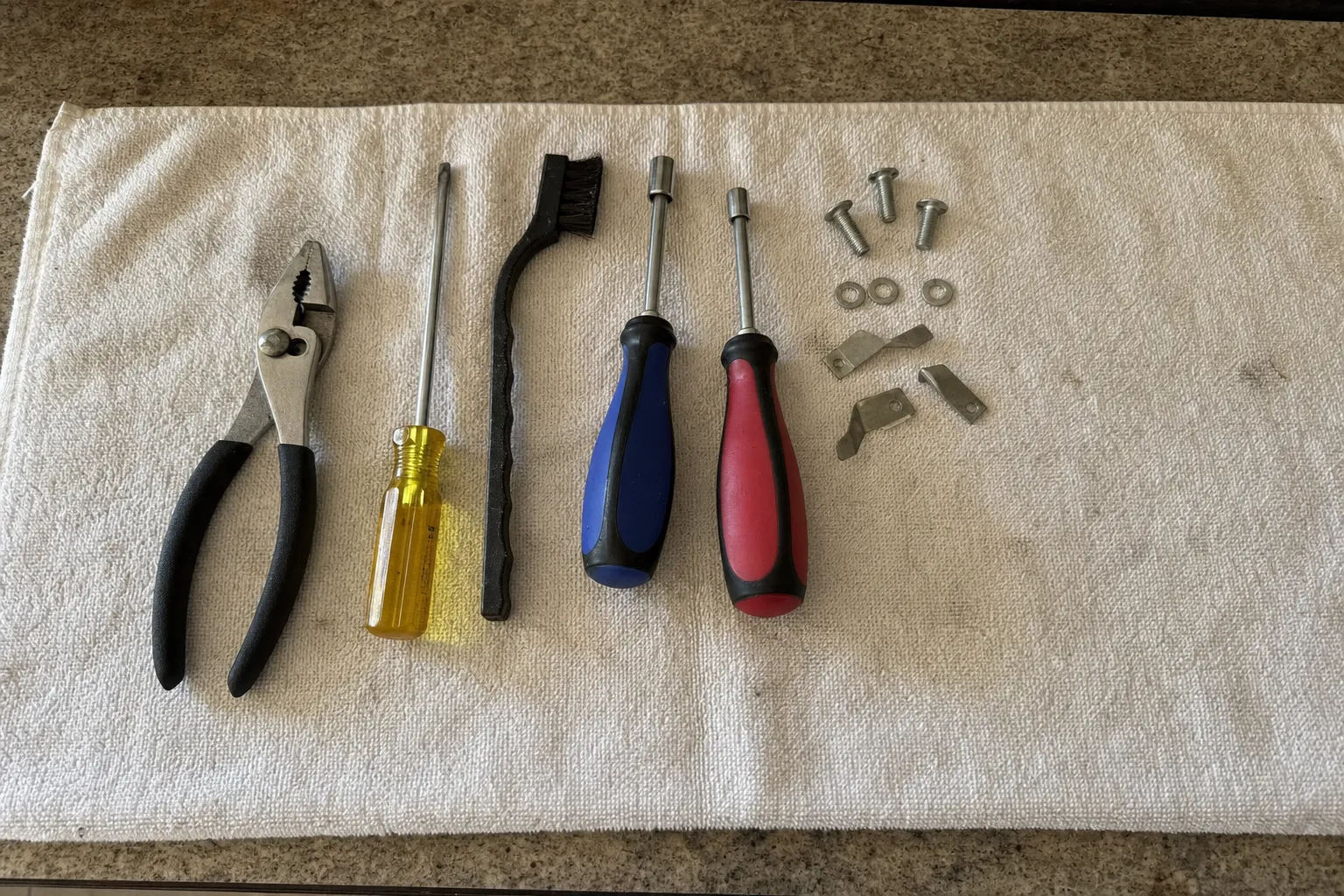
35/44 Range oven cavity
Viking Range Convection Fan Motor
The motor and blade behind the round back-wall cover that circulate oven heat for convection.
- Written by
- Hollis Yamada
- Works on
- Service technician — refrigeration and cooking
- Experience
- 21 years in the trade
- Published
What the fan does
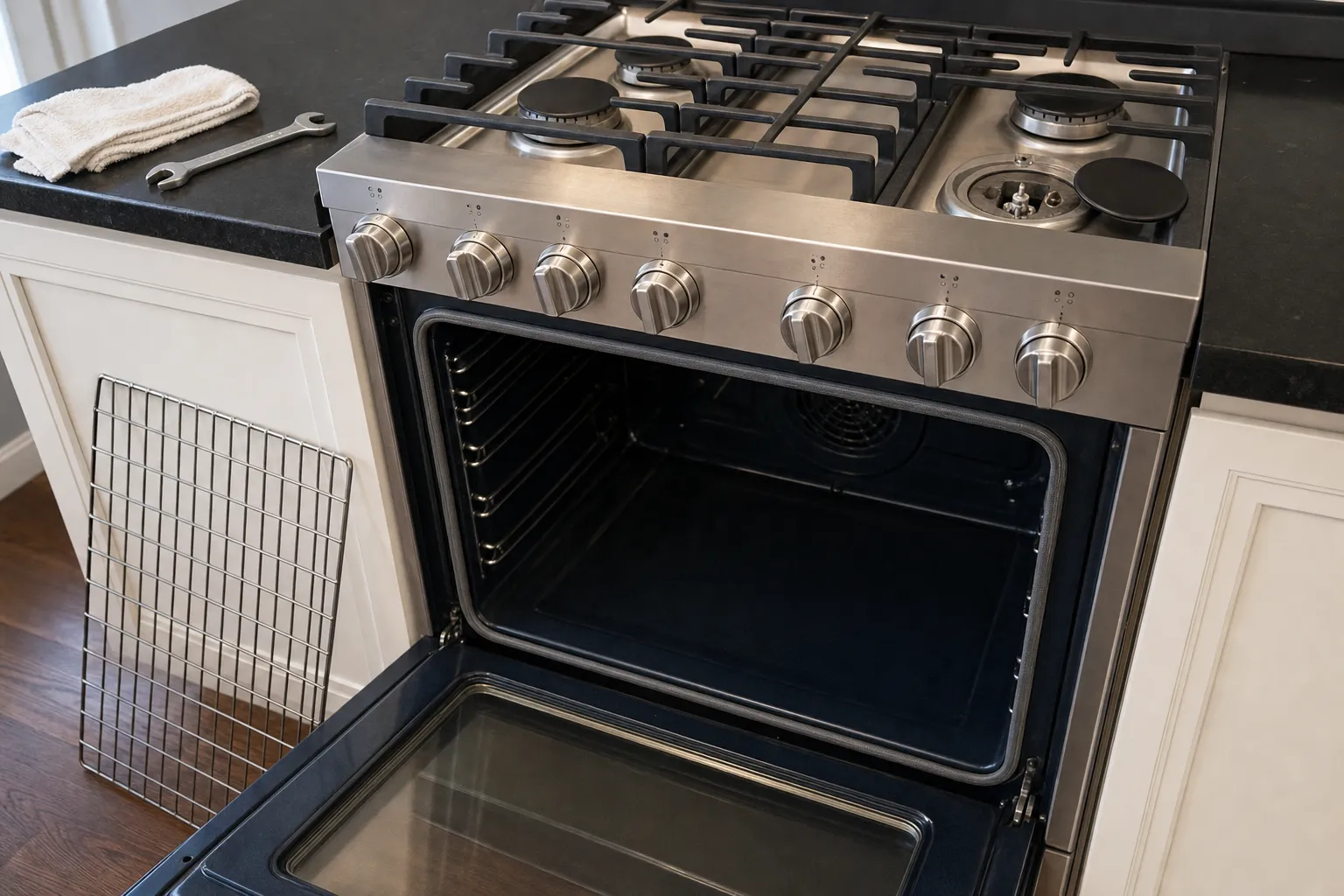
The convection fan sits behind the round cover on the oven’s back wall. On knob-controlled Viking gas ranges it runs when you turn on its switch, pushing heat from the bake burners around the cavity so several racks cook evenly; Viking’s guides also run it with the heat off to defrost. It is not the cooling blower: on self-cleaning models that blower keeps the door-lock parts and their circuits cool, outside the cavity. Nothing about Issaquah’s water, air or gas wears a convection fan out sooner.
How it fails
Viking’s service manual gives two reasons a fan will not run: no power reaching it, through the switch or its wiring, or the motor itself, with an open winding or a frozen shaft. Before that, a tiring motor often grinds, squeals or starts sluggishly, and convection bakes drift back to uneven. Getting at it means power off, door off and the back-wall cover unscrewed, which is service work. When the fan fails alongside another oven fault, two faults at once sets the choice out; a single motor is part of an oven repair visit.
Signs and thresholds
| What you notice | The line it crosses | What happens next |
|---|---|---|
| Grinding or squealing from the back wall | Carries on once the oven is warm | Worn motor replaced before the shaft seizes. |
| Fan still with its switch on | Door shut, switch on, nothing turns | Switch, wiring and motor tested in that order. |
| Convection bakes uneven again | Still uneven with the racks in the guide's positions | Fan speed and blade checked, and the bake flame too. |
| Scraping or rattling behind the cover | Heard on every run | Blade and mounting inspected; bent or loose parts put right. |
What you can do yourself
- On knob-controlled ranges the fan has its own switch; make sure it is actually on.
- Check the range's breaker; the fan needs household power even on an all-gas range.
- Leave the round cover on the back wall in place; behind it is service work.
- Stop there. Anything past this is a job for Viking Repair Issaquah — call (425) 920-9484.
When to call
Call when the fan stays still with its switch on, when grinding or scraping comes from the back wall, or when convection results slide back towards uneven.
Call (425) 920-9484Asked about the convection fan motor
Why won't my Viking convection fan come on?
On knob-controlled Viking gas ranges the fan has its own switch, so check that first, then the breaker. Past those, Viking's service manual points to the switch, the wiring, or the motor's winding or a seized shaft. Viking Repair Issaquah tests them in that order; call (425) 920-9484.
Is the convection fan the same as the cooling fan?
No. The convection fan stirs air inside the oven from behind the back-wall cover. A cooling fan, on ranges that have one, moves air past the controls and door-lock parts outside the cavity. They fail separately. Viking Repair Issaquah works out which one is noisy; call (425) 920-9484.
Can I keep baking with a noisy convection fan?
Conventional baking with the fan switched off is fine while you wait, because the bake burners heat the oven without it. Keeping a grinding motor running can end in a seized shaft. Viking Repair Issaquah replaces a worn motor on an oven repair visit; call (425) 920-9484.